Gift Box Finishes Explained: Matt, Gloss, Soft-Touch and Foil
A finish changes how a box looks under shop lights, how it feels in the hand and how well it copes with handling. Here is what each option does, where it works and what it costs you in other ways.
By The Gift Boxes design team ·
What is the difference between print and finish?
Print puts the colour and artwork on the board or wrap paper. A finish is what goes over or into that print afterwards.
On our boxes the base layer is full colour print, with Pantone matching on request and printing inside if you want it. On top of that sits a lamination: matt, gloss or soft-touch. Foil, embossing, debossing and spot UV are then added to chosen areas only.
So most boxes have one lamination over the whole surface and, if you want, one or two detail finishes on the logo or a pattern.
It helps to choose the lamination first, as it sets the mood of the whole box. The detail finishes then work as accents against that background, not as a second design.
What does matt lamination look like?
Matt lamination is a thin film with a flat, low-sheen surface. Colours look calmer and slightly softer than on the proof screen, and there is little glare under bright lights.
It is the most common choice for rigid boxes and suits nearly any artwork. Text stays easy to read from any angle, which matters on a box with care notes or ingredients.
The trade-off is that dark matt surfaces show rub marks if boxes slide against each other. Pack them with tissue or a sheet between layers when they are stored.
Matt is also the safest choice if you are unsure. It flatters most palettes, photographs well for product listings and gives foil or spot UV a quiet background to stand out against.
When does gloss lamination make sense?
Gloss film reflects light and makes colours look deeper and brighter. Reds, blues and photographs gain contrast, so it is a good match for bold, busy designs and playful ranges such as party and birthday boxes.
Gloss also wipes clean easily. That helps on a box that will sit in a shop and be picked up many times.
Its weak spots are glare and fingerprints on dark colours. Under strong shop lights, a large gloss panel can make small text hard to read. Folding card boxes take gloss well, and you can see the shapes in our folding gift boxes range.
Is soft-touch lamination worth it?
Soft-touch is a matt film with a velvety surface. People notice it as soon as they pick the box up, and it makes plain dark colours feel deliberate rather than flat.
It is a popular choice for beauty, jewellery and fragrance boxes, where the box is handled closely. It works best with simple artwork and plenty of solid colour.
Soft-touch marks more easily than standard matt. Oily fingers leave shadows on black or navy, and a hard scrape can leave a shiny line. If boxes will be handled a lot before sale, think about matt instead, or keep soft-touch for a smaller run.
- Choose it when: the box is a keepsake and the feel matters as much as the look
- Avoid it when: boxes are stacked loose in a stockroom or handled at a busy counter
- Pair it with: foil or spot UV, as the contrast against the velvet surface is strong
How does foil work and which colours can I choose?
Foil is a thin metallic layer pressed onto the box with heat. It gives a bright, mirror-like line that catches light as the box moves, which ordinary gold ink cannot do.
We offer gold, silver, rose gold or a colour foil. Gold suits warm palettes, silver sits well with greys and blues, and rose gold suits pinks and creams.
Foil also changes with the light. Under warm shop lighting gold looks richer, while under daylight silver reads cleaner. If you can, look at the proof with the box setting in mind.
Foil works best on logos, borders and short lines of text. Very fine type or thin lines can fill in, so keep strokes clear and tell the designer which parts are foil. On a presentation piece, foil on the lid alone is often enough, as on our presentation boxes for awards and kits.
What are embossing, debossing and spot UV?
Embossing pushes part of the design up from the surface, so a logo stands proud and can be felt. Debossing presses it down into the board instead.
On rigid boxes, the wrap paper is pressed before it goes over the greyboard. A deboss tends to read more clearly on rigid styles, while an emboss suits thicker areas of artwork.
Spot UV is a clear, glossy coating printed only where you want it. On a matt or soft-touch box, a spot UV logo shines against the flat background and shows up when the box is tilted.
- Pick the one element that matters most, usually the logo.
- Choose a single detail finish for it: foil, emboss, deboss or spot UV.
- Only add a second finish if it does a different job, such as foil on the logo plus a spot UV pattern.
- Ask the designer to mark each finish as a separate layer on the proof.
How do the finishes compare?
Use this table as a quick check against your product and how the box will be handled.
| Finish | Look | Handling | Works well for |
|---|---|---|---|
| Matt lamination | Flat, calm colour | Shows rubs on dark colours | Most rigid boxes, text-heavy panels |
| Gloss lamination | Bright, high contrast | Wipes clean, shows prints on dark | Bold artwork, photos, shop shelves |
| Soft-touch lamination | Deep, velvety matt | Marks most easily | Beauty, jewellery, keepsakes |
| Foil | Metallic shine | Holds up well on logos | Logos, borders, short text |
| Emboss or deboss | Raised or pressed shape | Can be felt, no extra wear | Logos on plain colour |
| Spot UV | Clear gloss on chosen areas | Same as the film around it | Logos and patterns on matt |
Which finish suits which box style?
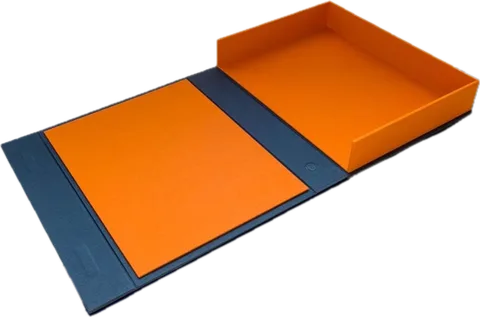
Rigid boxes give finishes the most room. The wrap paper is flat and smooth, so soft-touch, foil and deboss all show clearly. A book style box, with its wide front cover, is a natural place for one bold foil or deboss, as you can see on our book style gift boxes.
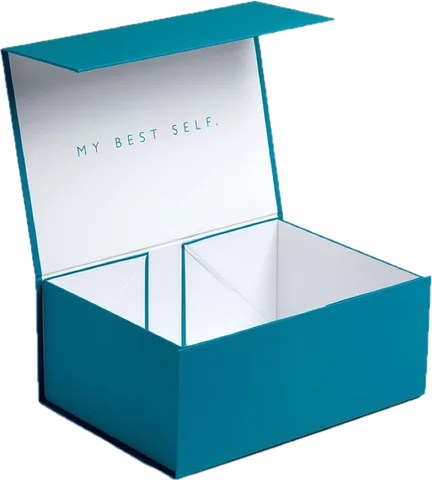
On a magnetic lid box, think about the front flap. It is handled every time the box opens, so soft-touch there will mark first. Matt with a foil logo on the lid top is a hard-wearing choice for boxes that get reused.
Folding card boxes take lamination and foil well, but a deep emboss can crack along the folds, so keep raised areas away from creases.
Kraft board has a brown, flecked surface. Colours print darker and foil sits well on it, but soft-touch adds little because the board texture already does that job.
How do finishes affect the quote and the timeline?
Every finish is quoted per job, so the quote shows exactly what you have chosen. Lamination is part of most boxes. Each detail finish adds a step, so each one adds to the cost.
Finishes do not change the production window. Folding card styles are made in 4–6 working days after proof approval, rigid styles in 8–10. Our £0.25 starting price is for folding card, and rigid styles are quoted higher.
If budget is tight, one foil logo on a matt box usually does more than three finishes spread thin. To price two options side by side, use the gift box quote request form and list both.
How do I check finishes before anything is printed?
Every order gets a free design proof. Finishes are shown on it as marked areas, so you can see exactly where foil, spot UV or emboss will land.
Check that small text is not set in foil, that no finish runs over a fold, and that the logo sits clear of the lid edge. Ask for edits as many times as you need before you approve.
If a finish arrives misprinted or damaged, report it within 10 days with photos and it will be reprinted or refunded. The full terms are on our reprints and refunds policy page.
Questions about this guide
Still unsure? Ask us on WhatsApp or call +44 7578 382054.
Can I have soft-touch on the outside and gloss inside?
The outside and inside are finished separately, so mixing is possible. Say which surfaces need which film on your quote request.
Does foil come in colours other than metallic?
Yes. As well as gold, silver and rose gold, foil is available in a colour. Name the colour you want and it will be checked on the proof.
Will matt lamination make my colours look different?
Matt film softens colours slightly compared with an uncoated or gloss surface. Pantone matching on request helps keep a brand colour close.
Can foil and spot UV go on the same box?
Yes, as long as they cover different areas. A common pairing is a foil logo on the lid with a spot UV pattern across the sides.
Is embossing visible without a colour on top?
Yes. A blind emboss, with no ink or foil, shows as a raised shape and reads best on a plain, light background.
Which finish hides scuffs best?
Gloss and standard matt hide light scuffs better than soft-touch. Light colours also hide marks better than dark ones.
Can kraft board be laminated?
Kraft can take a finish, but many buyers leave it plain to keep the natural texture. Foil on plain kraft is a popular choice.
Do finishes add to the production time?
No. Production is 4–6 working days for folding card and 8–10 for rigid after proof approval, with finishes included.
How fine can text be in foil?
Keep foil text bold and not too small, as thin strokes can fill in. The designer will flag anything too fine on the proof.
Can I see the finish options before I upload a logo?
Yes. Try your logo on the Design Your Gift Box page, then note the finishes you want on the quote request.
Send us your brief
Tell us what goes in the box, the size and how many you need. A quote comes back within one working day, and a free design proof follows before anything is printed.